



A dozen years ago, a family purchased a rustic home at auction in Manheim, Pa. As is often the case, the “property sold as is” turned out to be less about its condition and more a warning label.
The septic system had long since surrendered, and radon readings were dangerously high. The HVAC system, though operational, was rasping out its last gasping breaths. What it needed was a HVAC/hydronic retrofit.
Yet the listing described the home as “move-in ready.” Apparently, field mice, ground squirrels and a healthy population of snakes appeared to agree.
Outside, poison ivy and sumac had staged a full takeover of the 3½-acre property, concealing a back garage. Still, the property had its charms—an active creek and several mature trees worth saving.
The family placed the winning bid in May of 2014. What followed was less a renovation and more an archaeological dig.
During 2014 and 2015, trade crews methodically dismantled the raised ranch from the inside out. Electrical systems, interior walls, flooring, improvised “insulation,” and nearly all plumbing and mechanical components were removed and hauled away, filling roughly a dozen large dumpsters.
From that clearing effort, a new vision emerged.
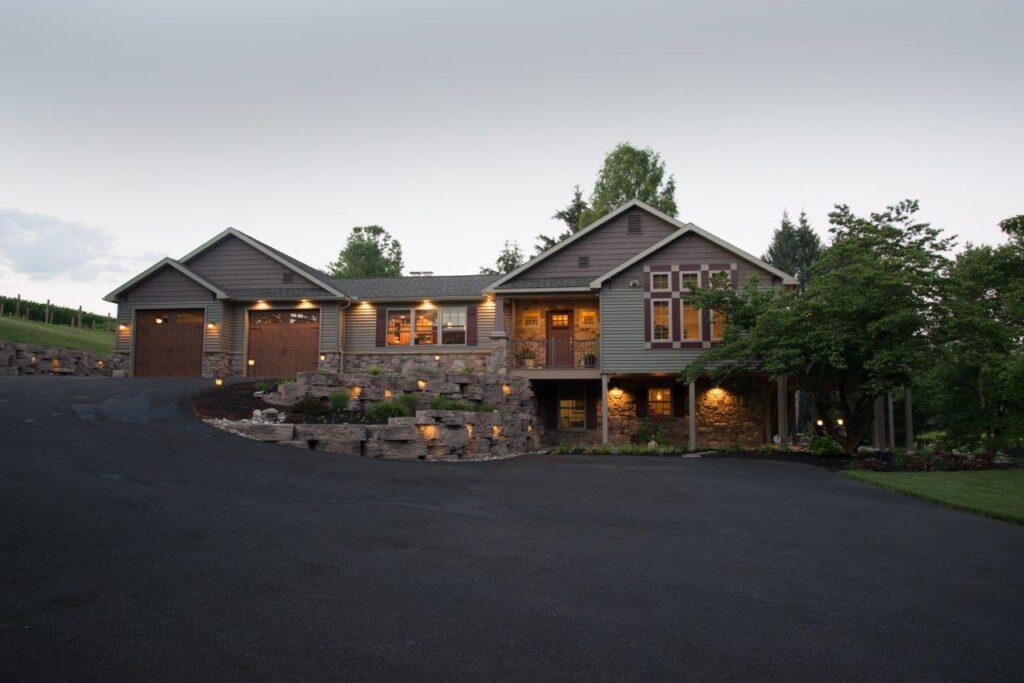
With added square footage and a reworked roofline, the structure evolved into an open-architecture, arts and crafts-style home. The transformation left little visual trace of the original building.
Behind the walls, however, the story was just beginning.
Hydronic Retrofit: Hydronically-inclined
When planning the remodel, the homeowners favored a blend of simple, durable design and practical technology. One of their earliest decisions was to install a wood-fired cookstove in the kitchen, a nod to both resilience and self-sufficiency.
Not every mechanical decision was a home run.
The original plumbing and mechanical contractor, selected largely on price, wasn’t pleased with the homeowner’s interest in hydronics. Begrudgingly, they installed an LP-fired wall-hung boiler to serve a six-zone hydronic system and an indirect water heater.
The boiler failed almost immediately and was replaced. Its successor lasted roughly a decade, though the final three years were plagued by operational issues, signaling deeper system-level shortcomings.
Enter Constant Comfort Solutions
The homeowners consulted several installers before settling on Trevor Brubaker, owner of Manheim, Pa.-based Constant Comfort Solutions (CCS), who evaluated the system.
“From our first meeting, we had full confidence in Trevor,” said the homeowner. “He diagnosed the challenges and quickly understood why many of them had occurred.”
Brubaker’s recommendations focused on long-term performance: replacing the boiler and indirect water heater and adding Runtal radiant panels throughout the home to improve aesthetics, comfort and system balance.
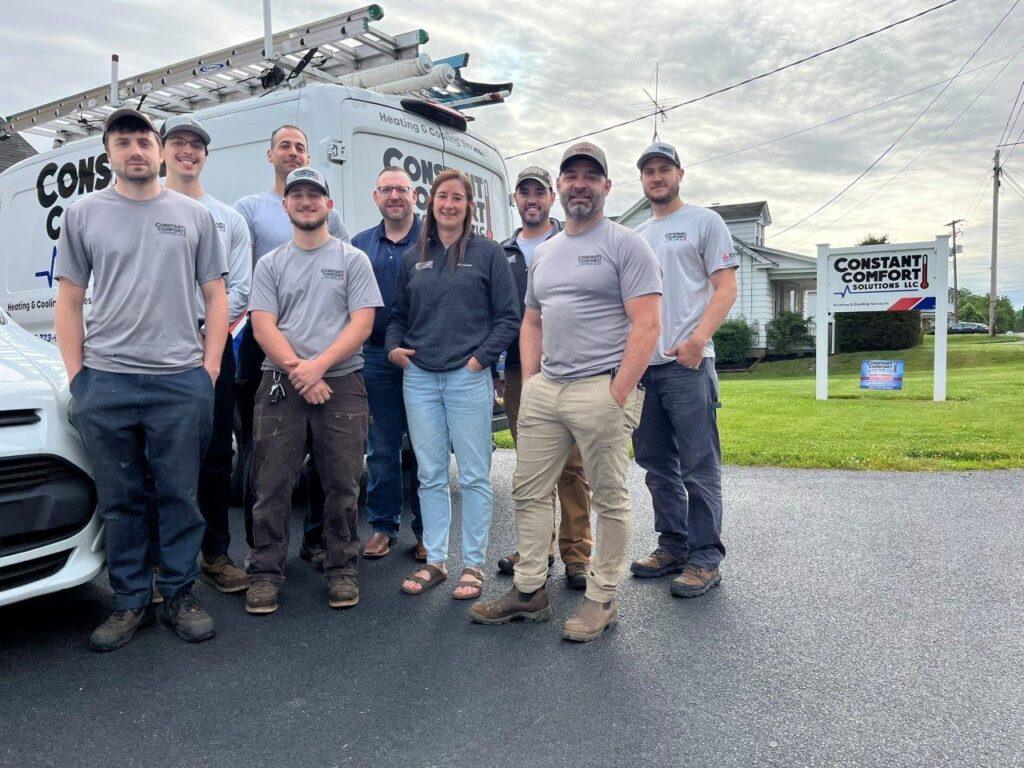
Brubaker got his start with two plumbing and mechanical firms, then decided in 2020 to pursue his interest in developing a firm to provide customer-focused, innovative solutions. He was delighted, a few years later, when James Snyder, a skilled mentor and trainer, joined CCS. Currently, CCS employs nine people all smartly selected for the work they do. “Enthusiasm and technical aptitude are the qualities we value most,” Brubaker said. “They’re the foundation for growth and good service.”
In 2025, Brubaker purchased an old fire station facility in Penryn, a small crossroads community in Manheim.
“We didn’t change the building’s look,” said Brubaker. “I enjoy being part of the community’s history, and it’s pretty cool that the building served for some many years. Today, we can help meet new emergencies—just those of a different nature.”
System Overhaul
After careful study of the homeowner’s hydronic system, Brubaker and Snyder crafted a plan to improve the system’s design—factoring-in system efficiency, comfort and performance.
“The original near-boiler piping needed a rethink,” Snyder explained. “It had the buffer tank—about 30 gallons—oddly connected in a way that forced its volume to be heated even when zones didn’t need heat. That slowed down recovery and made the system less efficient.”
Brubaker’s team used key insights from an article by John Siegenthaler. They installed an automated three-way valve and re-piped the buffer tank as a hydraulic separator within the primary loop. This allowed them to eliminate two circulators—saving energy, reducing complexity, and improving reliability.
“By piping the buffer tank in parallel and using a three-way valve, we got heat directly from the boiler with minimal losses, while meeting the boiler’s need for 10 GPM flow—improving thermal efficiency and eliminating the need for two circulators,” explained Brubaker.
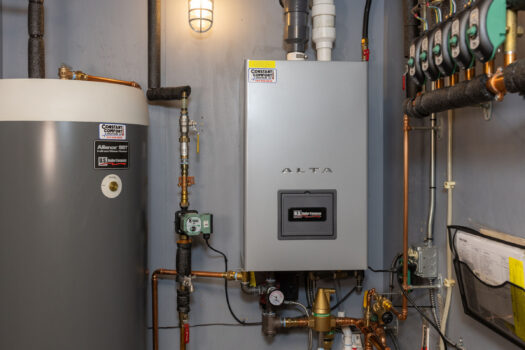
The new system’s crown jewel is an 80 MBH US Boiler ALTA, sized to meet the well-insulated, 2,500-sq.-ft. home’s heat load, and also to provide quick recovery for a 75-gallon Alliance SST indirect hot water heater. The home’s low heat load, and the family’s larger domestic hot water needs are now met.
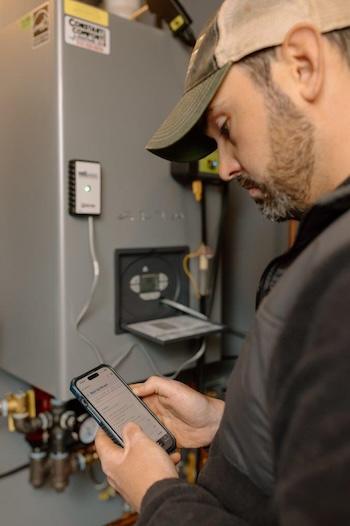
“We also used US Boiler’s ‘USB-Connect’—a diagnostic and programming tool for installation and service work,” added Brubaker. “It enables wireless, real-time troubleshooting, commissioning, and firmware updates for several of their boilers, including the ALTA. It was very helpful and saved plenty of time with the commissioning.”
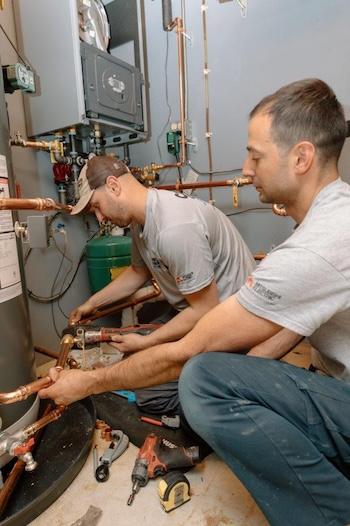
“We especially like that the ALTA boiler is manufactured in Lancaster, just 20 minutes from here,” said the homeowner. “They also offer the Alliance water heater [the indirect], so we’re especially pleased with the choice of US Boiler’s equipment,” said the homeowner.
Brubaker explained to the homeowners that another key supplier was important. “We favor and install Taco technology, including pumps, circulators, air separators and eliminators, zone valves and controls, heat exchangers and expansion tanks. I’ve installed their equipment for years and have never been disappointed with performance.”
Brubaker and Snyder chose to retain the original buffer tank. The 3-way valve enabled CCS to optimize its contribution. Even with a 10:1 turndown, a few of the zones were so small that—with the buffer in place—the boiler enjoys longer run times, eliminating short-cycling.
The system now has five heat zones and another set aside for DHW as priority. In addition to the ALTA and its Alliance sidekick, CCS technicians installed a Taco VT2218 ECM circulator to drive system fluids to and from all zones. Controlling all zones are Taco Zone Sentry Zone Valves. They also used Taco’s new zone control, pressure-reducing valve, 4900 dirt mag, and the company’s SmartPlug paired with a stainless 006e3 for domestic water recirculation.
The Home Stretch
Thirteen Runtal radiant panels now provide even, comfortable heat throughout the home—aesthetic elements that complimented the home’s interior, sleek, and highly effective.
Just before the end of the heating season, the family welcomed Leo, their lively Shelty puppy. From the moment Leo set paw in the house, he discovered that those radiant panels meant instant warmth.
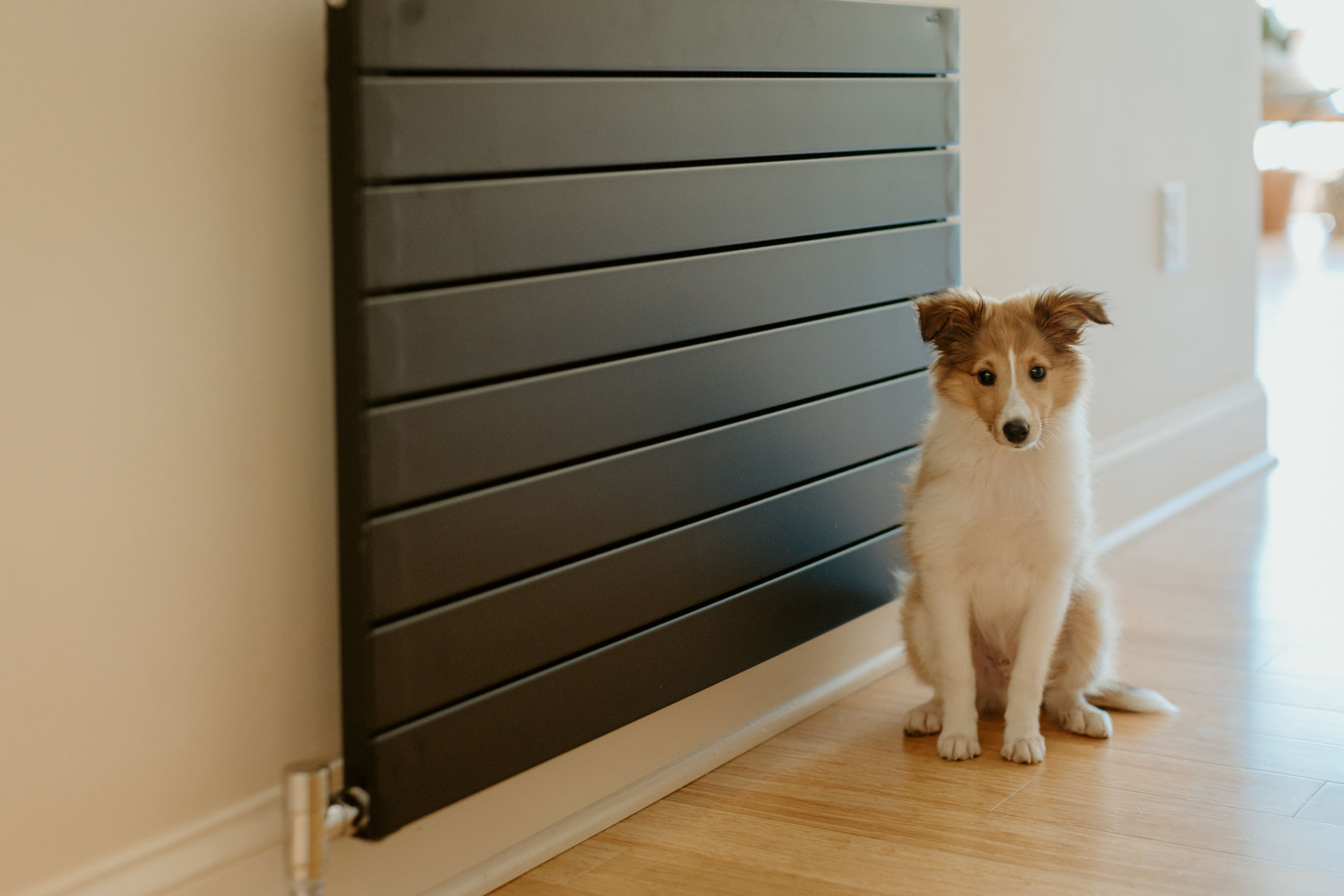
Now, whether curled up in front of a panel or bouncing around the living room, Leo quickly became a hydronics enthusiast.
The family didn’t expect the new pup to have a favorite spot in the house—let alone become a hydronic heat connoisseur. But if Leo’s happy, and if warm naps in front of the panels are any indication, this home’s comfort isn’t just for humans anymore.
And hey, if Leo’s love of the panels keeps him cozy and off the furniture, everyone wins.
For more info on the ALTA boiler, visit https://altaboiler.com/.
Also published on Mechanical Hub.